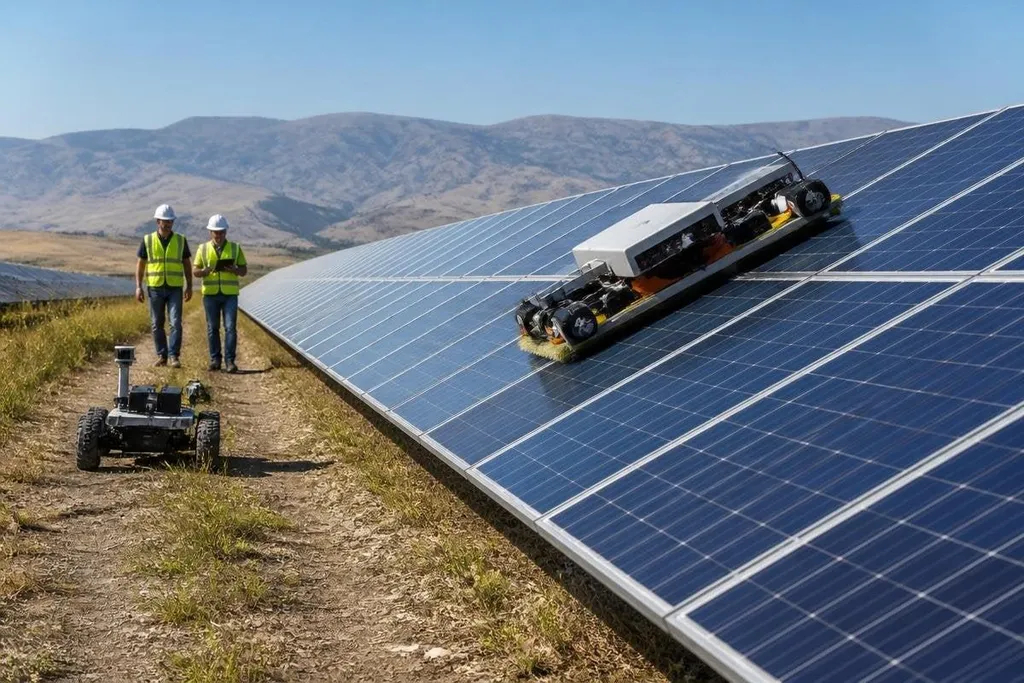
Solar farms can stretch across hundreds of acres, where dust, grass, heat, and uneven ground affect daily work. Robots can clean panels, inspect equipment, and control plant growth, but each task brings its own limits.
- Dry-cleaning robots remove dust without sending workers across long panel rows.
- Inspection robots can spot heat changes, damaged panels, and blocked paths.
- Rain, slopes, loose soil, and poor site planning can stop a robot from working.
Where robots help
Panel cleaning is the most visible use. A cleaning robot moves along the panel surface with brushes, rollers, or air systems. Dry systems can reduce water use in places where water delivery is costly or restricted.
The benefit comes from repeat work. Dust reduces the light reaching a photovoltaic panel, so output can fall. Following the same route on a set schedule lets a robot clean large rows without sending a worker to carry tools across the site.
Inspection is another useful task. Ground equipment can carry a camera, while a drone can view panels from above.
Thermal cameras can find hot areas that may point to a damaged cell, loose connection, or failing electrical part. The image shows where a technician should look next, which cuts the time spent searching.
Some ground robots also mow or cut vegetation between panel rows. That matters because tall grass can block access, shade lower panels, and make fire control harder. The robot still needs a route that avoids cables, drainage channels, fence posts, and service vehicles.
The machines need a prepared site
Solar farms look open from above, but the ground can be difficult. Rows may sit on slopes, soft soil, gravel, or land with sudden dips. A robot needs enough grip to climb, enough clearance to pass under panel frames, and sensors that can spot obstacles before contact.
Many systems use LiDAR, which measures distance with laser pulses, along with cameras or wheel sensors. These tools help the robot map its route and keep its position. They don't remove the need for a site survey, marked work areas, and a plan for recovery when the machine stops.
Weather adds another limit. Rain can reduce wheel grip and make dry cleaning less useful. Strong heat affects batteries and electronics. Wind can stop drone inspections, while dust can cover cameras and reduce the quality of captured images.
The risks sit outside the demo
Finishing a planned route doesn't mean the site team has no new work. A brush may catch on a panel frame. A mower may approach a cable trench. A drone may lose its link near electrical equipment or leave the approved flight area.
Safety rules need to cover people, vehicles, panels, fences, and power equipment. Geofencing can block a robot from entering marked zones, but the map must match the site. An emergency stop must be easy for workers to reach, and the team needs a clear process for lifting or towing a disabled machine.
Maintenance also changes the cost. Brushes wear, wheels collect dirt, batteries lose capacity, and cameras need cleaning. A solar operator should price spare parts, software support, inspections, and staff training alongside the robot itself.
A robot that works on one panel row may still fail across a large site when dust, slope, or weak signals change the route. Robot24 gives you a place to check the site, test date, weather, and measured result behind a solar robot claim before the buying checklist asks whether the machine fits your ground.
A buying checklist for solar operators
Use these checks before choosing a system:
- Map the ground: record slopes, soft areas, drainage paths, cable routes, and narrow gaps between rows.
- Name the task: decide if the robot will clean panels, inspect faults, cut vegetation, or handle more than one job.
- Check the recovery plan: confirm how two workers can reach, lift, tow, or reset the robot after a stop.
- Price the service work: include brushes, wheels, batteries, cameras, software, and staff training.
- Test the weather limits: set clear rules for rain, heat, wind, dust, and low battery charge.
- Measure the result: compare cleaning time, inspection findings, water use, and worker travel before and after deployment.
What happens next
The best fit depends on the site, not the robot's product video. I'd start with one repeat task, run it through a full weather cycle, and keep a human technician responsible for every fault the robot reports.
That approach leaves a useful question for each operator: can the machine reduce field work without adding a harder maintenance job?